
The Dopesick is just a great show. It unfolds the heinous truths behind the rampant opioid crisis with soul-stirring stories of the prescribers, addicts, prosecutors and enforcers.
The excitement has not abated, almost a week after I watched the last episode of the miniseries. I relived the scenes in my head, repeated the lines, and finally calmed myself down and started writing to share my thoughts.
The greatness of the show could be condensed into three key points (traumatized by workplace writing). The first greatness is the wonderfully crafted fictional stories inspired by real lives. I like three characters most, Dr. Samuel Finnix (my favorite), the doctor with guilt and redemption; Betsy Mallum, the struggling chronicle pain sufferer and Bridget Meyer, the determined OxyContin fighter. Although the theme connecting them is the oxycontin crisis, their stories are individualized with multiple layers and facets. Samuel is a city widower living alone in the Appalachian Mountains and also a respectable doctor in the local mining community, before the Oxycontin days. As persuaded to prescribe OxyContin and later trapped with the heavily addictive drug himself, he heads for a downward spiral and eventually loses his medical license. His odyssey of retrieving his lost soul is one of the most heart-wrenching stories in the show. Working as a miner, Betsy was prescribed oxycontin by Samuel due to a work injury, and unknowingly began her journey into downfall and death eventually. The unfurling plots reveal Betsy to be a lesbian and a rebel in a religious family, making her relatable. Bridget is the first female to reach the highest rank at DEA as deputy director and she shows great determination to tackle the opioid crisis, maybe at an unexpected cost.
The second greatness of the show is the innovative use of non-linear narrative. Some criticize this as an incoherence in structure. Although not knowing the reasons why creators choose to jump among the time frames, I happily accepted the challenge of taking notes myself on the shifting timelines. The non-linear mode feels refreshing compared with the either sequential or reversed order. For example, in Bridget’s story, we know from the start that she was going through a divorce. As we watch along, we learn about the guy who she dated, married and finally separated with. Even if we are told the end of her relationship, the time-jumping narrative just increases our curiosity to find out why and how and cannot help sympathizing with Bridget when she enters the marriage merrily, as which is known to be doomed.
The third greatness of the show is heart-touching scenes in matching surroundings. The background music amplifies the emotional effects with the backdrop of silent, snowy mountains. The songs differ at the end of each episode, usually echoed with the story evolution. The scene I could not erase from my mind is the one that Samuel drives his former patients in a school bus for detoxication treatment. The zigzag roads through the snow-capped mountains are in stark contrast with the brightly colored vehicle driven by Samuel. It is possible to imagine that the sullen winter view reflects the severity of the opioid crisis, while the bright color represents a little sparkle of hope lit up by human kindness. The journey for Samuel means not only to rescue the troubled locals but also to alleviate his inner burdens of addicting them in the first place. Such scene is revved up by serene or maybe biblical music, ascending into the finale of desperation and redemption.
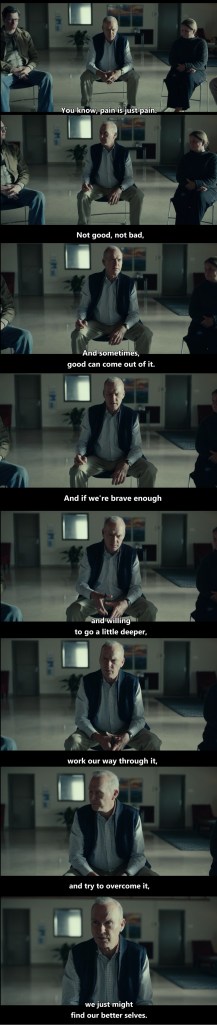
The Dopesick is great beyond the above biased measurements. I will end this post with Samuel’s confession at the end, masterfully rendered by Michael Keaton.
 Martian Notes
Leave a comment