
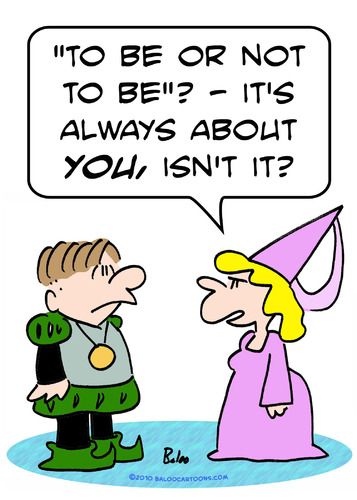
Neurotic people think that life is like Hamlet, where they are Hamlet, and everyone is looking at them and judging their psyche in a good or bad way. In fact, everyone is his or her own Hamlet and views other people as minor characters in his or her personal drama.
Kudos to this magnificent excerpt from Pamela Druckerman’s genius work of “There Are No Grown-ups: A Midlife Coming-of-Age Story“.
In an unrealistic world of non-stop social media rants and the constant noises of short video streaming, the Hamlet phenomenon has been more obvious than ever. Everyone is only his or her own Hamlet, the distraught prince in quest of the meaning of existence in the center of stage, gazed by a group of breathtaking audience. In reality, the stage is the phone or versatile apps, while the audience, is evidenced by the clicks of likes or dislikes and comments posted on either a selfie or a short video generated by the oversharing protagonist.
Nonethelss, the show must go on and be over. When the curtain was lifted in the end, there would be no audience or thunderous applauses from living creatures but the mechanical sound effects, and just a sole figure in an imaginary drama scene, perhaps in a crown purchased online. The Hamlet phenomenon, debunked.
It is a time for growth in all age groups. We need to recover from a stage-four patient of the Hamlet phenomenon, “everyone hates me”, to a human being with clear minds, “they don’t really care”. This underlying truth could be a solution to most self-inflicted agonies since puberty.
Wake up, Hamlet. Take off the fake mantle and roll up the sleeve. We could have saved ourselves from so many impulsive, unnecessary emotional outbursts or breakdowns. We could have just lived a casual, calm and peaceful day, as a happy peasant.
 Martian Notes
Leave a comment